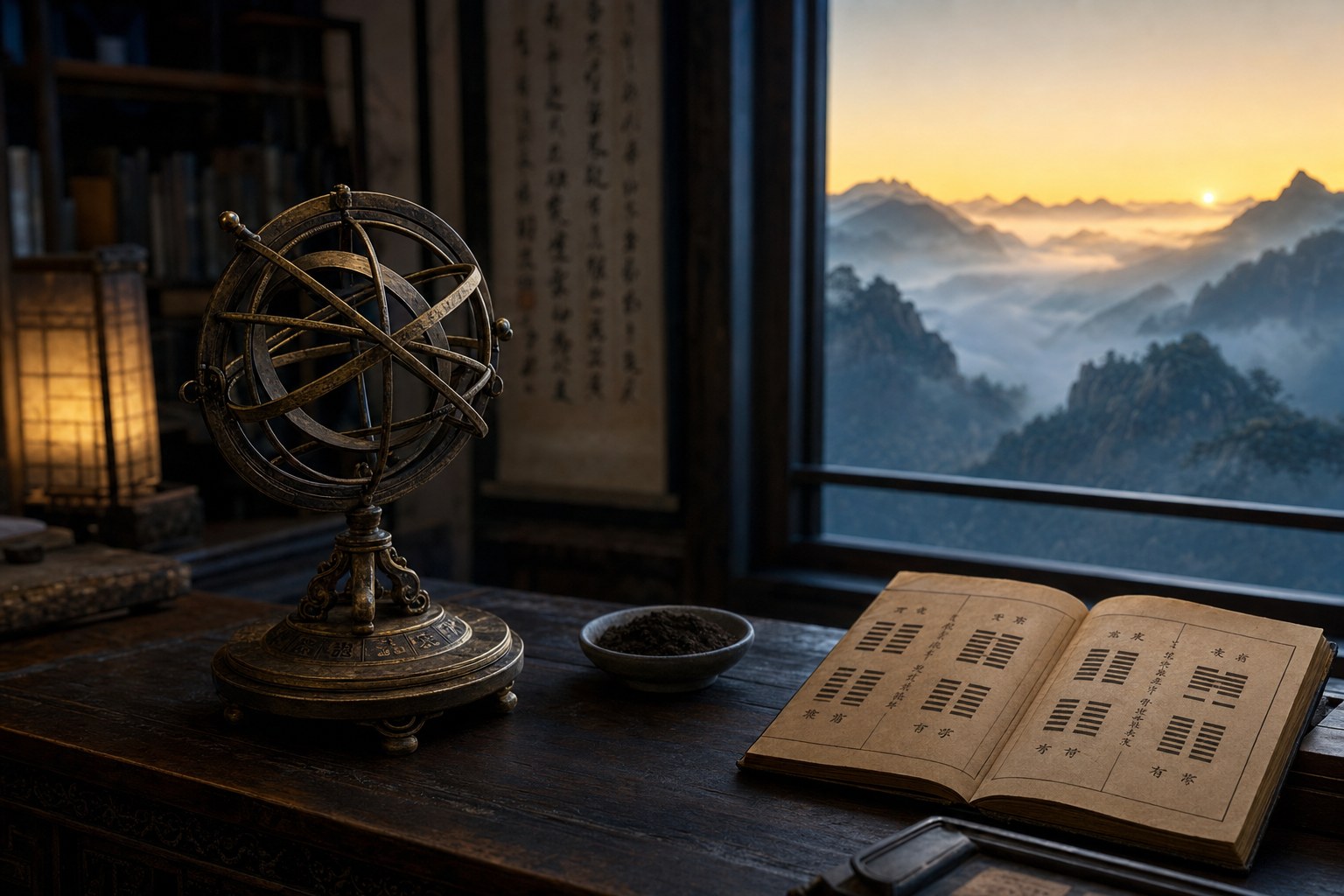
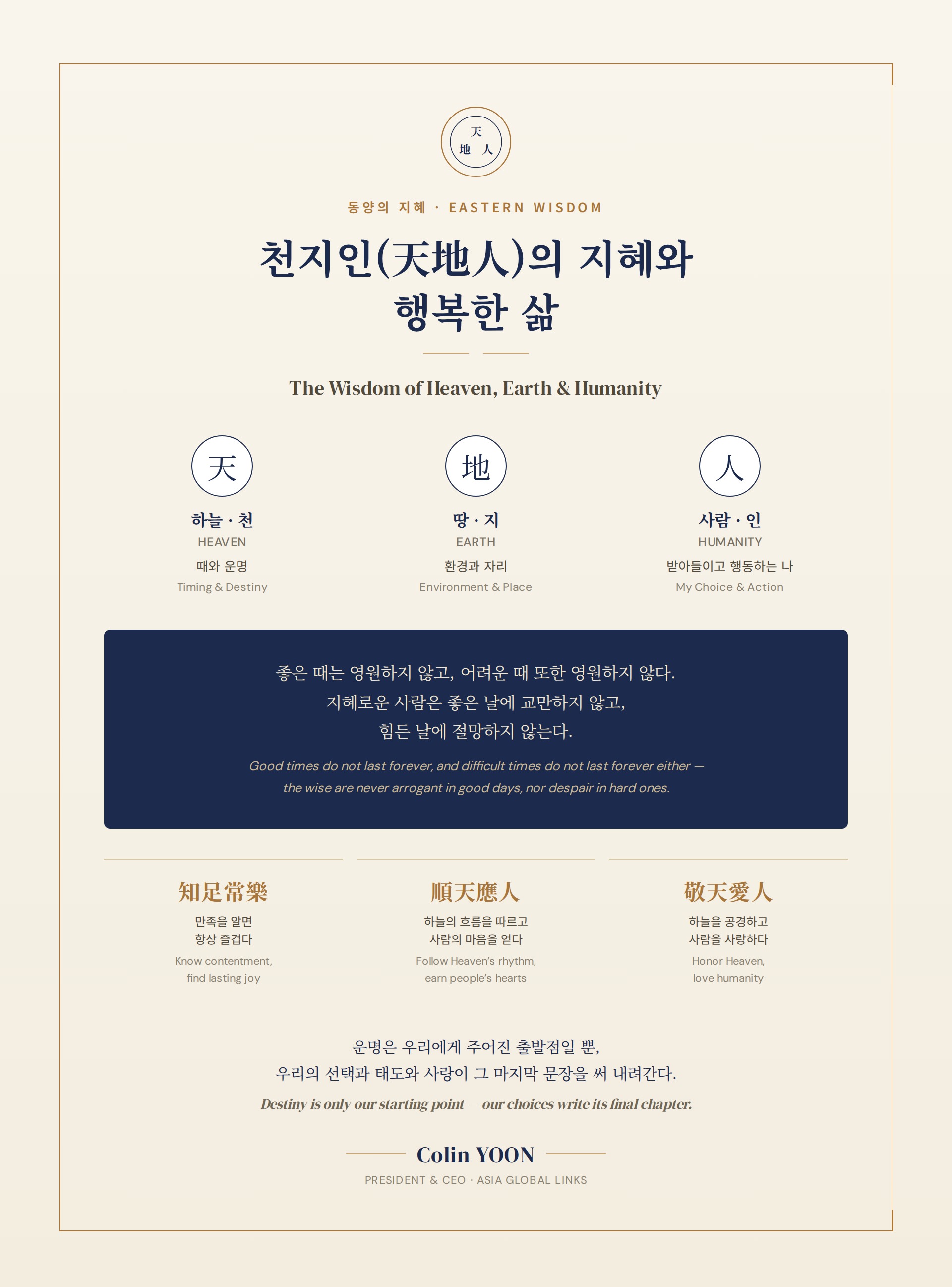
There are things in life we cannot choose: the time and circumstances of our birth, the environment we are born into, the people we happen to meet, and the unpredictable turns of fate that follow. Eastern philosophy has a name for the forces at work in all of this — Heaven, Earth, and Humanity, or 天地人. Heaven (天) is timing and destiny. Earth (地) is environment and circumstance. Humanity (人) is the self that receives both, and chooses how to act.
Nothing stays as it is
The I Ching (周易) teaches that the world is in constant change. Good times do not last forever, and difficult times do not last forever either. The wise, understanding this, are not arrogant when things go well and do not despair when things go badly. Between those two extremes sits a discipline worth naming directly: the wisdom to wait for the right moment, the wisdom to read one’s circumstances honestly, and the courage to act once both are understood.
A mirror, not a sentence
The Four Pillars of Destiny (四柱) work the same way. They were never meant to hand down a fixed verdict on a life. They function better as a mirror — a way of reflecting on the temperament we were given and the currents that tend to run through our lives. What matters in the end is not which chart we were born under, but how we choose to live the life that chart describes.
What the second half of life teaches
By the time we reach the later chapters of life, most of us have learned something the first half rarely makes obvious: having more is not the whole of happiness, and climbing higher is not the final purpose of living. Three old phrases carry that lesson better than any modern one I have found.
知足常樂 — know contentment, and joy follows on its own. 順天應人 — follow the rhythm of Heaven, and earn the hearts of people. 敬天愛人 — honor Heaven, and love humanity.
Wait for Heaven’s timing. Accept the reality of the Earth you are standing on. Treat the people in front of you with warmth and dignity. That is the whole of it, and it is enough.
The final sentence is ours to write
Destiny gives us a starting point. It does not write the ending. Our choices, our attitude, and our capacity to love are what compose the last sentence of that story. When Heaven, Earth, and Humanity come into balance, a life moves beyond destiny and becomes wisdom — and happiness stops being something reserved for the fortunate. It becomes something found by anyone willing to live thoughtfully with whatever they were given.